
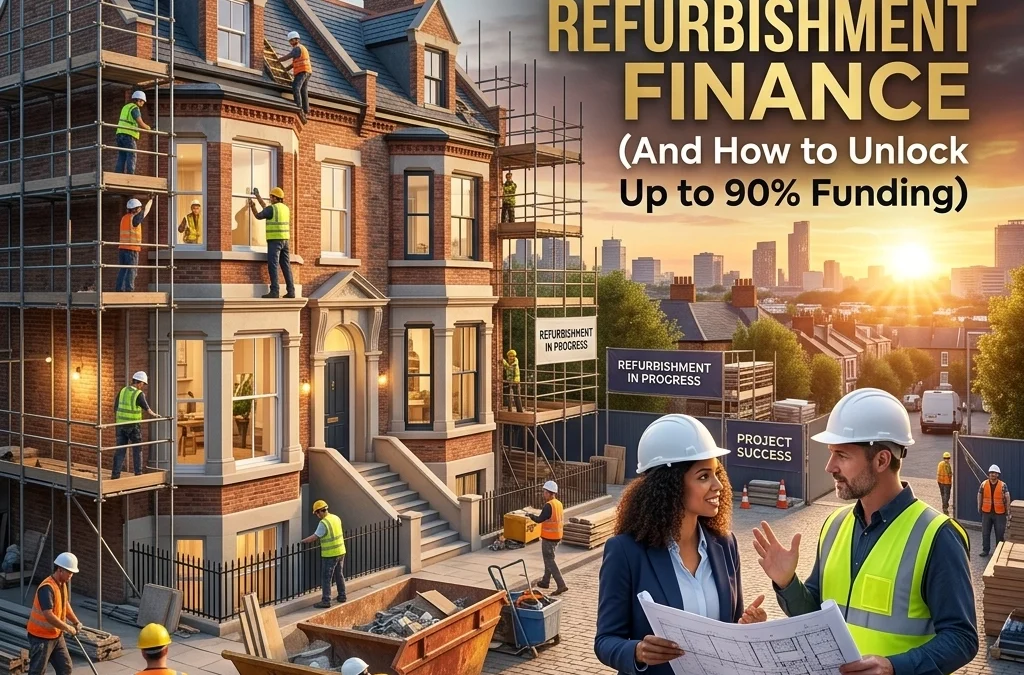
Facebook Summary: Thinking about flipping a property but worried about the costs? We’ve rounded up the 7 biggest mistakes investors make with refurbishment finance and, more importantly, how you can unlock up to 90% of the funding you need. Stop leaving profit on the table and learn how to fund your next project the smart way.
Let’s be honest, the UK property market isn’t exactly a "walk in the park" right now. Whether you’re looking at a terraced house in Oldham or a larger HMO project in Greater Manchester, the margins can be tight. That’s why so many investors are turning to refurbishment projects. Buying a "fixer-upper" is one of the best ways to manufacture equity and boost your rental yields.
But here’s the kicker: how you fund that refurb can make or break your profit.
At Hunter Capital, we see property developers and investors make the same mistakes over and over again. These errors don't just cost a few quid; they can sink a project before the first sledgehammer even swings.
If you’re tired of being told "no" by high-street banks or you’re struggling to find the cash to cover your renovation costs, this guide is for you. We’re going to dive into the seven biggest mistakes you’re making with refurbishment finance and show you how to unlock up to 90% of the funding you need.
1. Underestimating the "Hidden" Costs
This is the number one project-killer. You walk into a property, see some peeling wallpaper and a dated kitchen, and think, "£20k will fix this." Then you pull up the floorboards and find dry rot. Or you realize the electrics haven’t been touched since the 1970s.
Many investors fail to build a proper contingency into their finance. When you’re applying for bridging finance or a refurbishment loan, you need to account for more than just materials and labor.
The Fix: Always add a 15–20% contingency buffer to your budget. Lenders like to see that you’ve planned for the unexpected. If you don't use it, great, that’s more profit for you. But if you do need it, having it factored into your initial loan prevents a mid-project cash flow crisis.

2. Choosing the Wrong Type of Loan
Not all property finance is created equal. We often see investors try to use a standard buy-to-let mortgage for a property that is technically "uninhabitable" (no working kitchen or bathroom). The bank says no, the deal falls through, and you lose your deposit.
Alternatively, some people use expensive personal loans or credit cards. The interest rates are eye-watering, and you don’t get the professional structure that specialized refurbishment finance offers.
The Fix: Understand the difference between "Light" and "Heavy" refurbishment.
- Light Refurb: No structural changes, no planning permission needed. Think kitchens, bathrooms, and decor.
- Heavy Refurb: Moving walls, extensions, or changing the "use" of the building (like turning a house into an HMO).
Picking the right product from the start, whether it’s development finance or a refurb-to-term bridge, saves you thousands in the long run.
3. Having No "Exit Strategy"
Lenders are like that one friend who lends you money but asks every five minutes when they’re getting it back. They want to know exactly how you plan to exit the loan.
If you take out a short-term refurbishment loan and don't have a plan for what happens when the work is done, you’re in trouble. Are you selling the property? Or are you planning to refinance onto a long-term mortgage?
The Fix: If your plan is to keep the property as a rental, get your buy-to-let mortgage "in principle" before you even start the refurb. This shows the lender you’re a pro and reduces the risk, which can often lead to better rates.
4. Ignoring the "GDV" (Gross Development Value)
Most people focus on what the property is worth now. But with refurbishment finance, the most important number is what the property will be worth once the work is finished. This is known as the GDV.
If you underestimate the GDV, you’re leaving money on the table. If you overestimate it, you might find yourself in a "negative equity" trap where you’ve spent more on the refurb than the house is actually worth.
The Fix: Look at "sold" prices for renovated properties in the same area (like Glodwick or Chadderton if you're local to us in Oldham). Don't just look at asking prices. A realistic GDV is the key to unlocking higher levels of funding.

5. Forgetting About the Professional Fees
The interest rate on your loan is only one part of the story. Many investors get caught out by:
- Arrangement fees (usually 1-2% of the loan).
- Valuation fees.
- Legal fees (often you have to pay for your lawyer and the lender’s lawyer).
- Exit fees.
The Fix: Work with a broker like Hunter Capital. We help you see the "Total Cost of Credit." We’ll break down every single fee so there are no nasty surprises on completion day.
6. Going It Alone Without a Broker
You might think you’re saving money by going directly to a lender. In reality, you’re limiting yourself to one set of criteria. High-street banks are notoriously "vanilla", if your project has a hint of complexity, they’ll likely say no.
The Fix: Specialist brokers have access to "broker-only" lenders. These are the guys who understand the Oldham property market and are willing to look at the potential of a project, not just a credit score. We can shop around to find the lender that fits your specific project.
7. Thinking 75% LTV is the Limit
This is the biggest mistake of all. Most investors think they need a 25% deposit for the purchase, plus 100% of the refurb costs in cash. That’s a huge amount of capital to tie up in one project.
The Fix: You can actually unlock up to 90% of the total project cost. This means the lender covers a huge chunk of the purchase price and a significant portion (sometimes 100%) of the refurbishment costs.

How to Unlock Up to 90% Funding
So, how do you actually get that 90% funding? It sounds too good to be true, right? It’s not: it’s just about knowing where to look and how to package the deal.
At Hunter Capital, we work with specialist lenders who focus on the Gross Development Value (GDV). Instead of just looking at what you’re paying for the property today, they look at what it will be worth tomorrow.
Here is a quick example of how it works:
- Purchase Price: £150,000
- Refurb Cost: £50,000
- Total Cost: £200,000
- Expected GDV: £280,000
A specialist lender might offer you 70-75% of the purchase price, plus 100% of the refurb costs (released in stages). When you crunch the numbers, you might find that your actual "cash in the deal" is only 10% of the total project cost. This allows you to keep your cash for the next project, scaling your portfolio much faster.
Why Oldham Investors Are Using Refurbishment Finance
Oldham is a prime spot for this kind of strategy. With a wealth of traditional terraced housing and a growing demand for high-quality rental accommodation, there are plenty of opportunities to take a "tired" property and turn it into a high-yielding asset.
Whether you're looking at HMO mortgages for a multi-room conversion or a simple flip, the right finance is the engine that drives your success.
Frequently Asked Questions (FAQ)
What is the difference between refurbishment finance and a standard mortgage?
A standard mortgage is for a property you can move into immediately. Refurbishment finance (usually a type of bridging loan) is designed for properties that need work. It’s short-term (usually 6-18 months) and is designed to be replaced by a standard mortgage once the work is done.
Do I need experience to get 90% funding?
While experience helps, it’s not always a deal-breaker. If you have a solid team (contractors, surveyors, and a good broker), some lenders are happy to support first-time investors.
How are the refurb funds released?
Usually, the funds for the renovation are released in "drawdowns." A surveyor will visit the site to confirm a stage of work is finished (e.g., the roof is on or the first fix is done), and the lender then releases the next chunk of cash.
Can I use refurbishment finance for Sharia-compliant projects?
Yes! We offer Sharia finance options for investors who want to grow their portfolio in a way that aligns with their values.
Don't Let Funding Hold You Back
Property investing is about taking action. If you’ve found a deal but you’re worried about the costs, don't let it slip away.
At Hunter Capital, we’re not just middle-men. We’re experts in the UK property market who know exactly how to package your application to get the "Yes" you need. From commercial mortgages to complex development deals, we’ve got you covered.
Ready to see how much you can borrow?
Stop guessing and start building. Let’s look at your project together and see if we can unlock that 90% funding for you.
Book Your Free Consultation with Naz and the Team Today
Or, if you just want to chat about the local Oldham market, feel free to contact us. We’re here to help you turn that "fixer-upper" into a profit machine.