

Facebook Summary:
Wondering how to scale your property portfolio in 2026? We break down whether a fast-paced bridging loan or a steady buy-to-let mortgage is the right move for your next deal. In a market where speed often beats price, knowing which tool to use is everything.
It’s April 2026, and if you’re looking at the UK property market, you’ve probably noticed one thing: things are moving fast. Really fast.
Whether you’re looking at a terrace in Oldham or a flat in the heart of Manchester, the competition isn't just coming from other investors, it's coming from cash buyers who can close a deal in days. As an investor, you have a big decision to make every time a new opportunity pops up on your radar. Do you go for the traditional, slow-and-steady route of a Buy-to-Let (BTL) mortgage, or do you use the "turbo boost" of a bridging loan?
I’m Naz Islam, Director at Hunter Capital. We talk to investors every day who are trying to figure out the best way to scale. In 2026, the answer isn't always about which loan is the cheapest, it’s often about which loan actually gets you the keys.
Let’s break down the 2026 landscape of bridging vs. buy-to-let and see which one fits your strategy.
The 2026 Reality: Speed is the New Currency
Back in 2024 and 2025, we saw interest rates stabilize, but in 2026, the bottleneck isn't just the rate, it's the process. Traditional banks have become even more cautious with their paperwork. A standard buy-to-let mortgage can take anywhere from eight to twelve weeks to reach completion.
In a market with low inventory and high demand, twelve weeks is a lifetime. By the time your surveyor has even booked an appointment, a "bridge-and-buy" investor has already completed, started renovations, and is halfway to a tenant moving in.
In 2026, speed often wins the deal. If a seller wants a quick exit, perhaps due to a probate sale or an auction, your ability to move in 7 to 10 days makes your offer look like cash.

What Exactly is a Bridging Loan in 2026?
Think of bridging finance as a short-term sprint. It’s designed to "bridge" the gap between buying a property and getting long-term finance (or selling it).
Why investors love bridging right now:
- Insane Speed: You can often get the funds in your bank account in about a week.
- Asset-Focused: Lenders care more about the property’s value and your "exit strategy" than your monthly salary.
- Flexible Condition: You can buy properties that are "unmortgageable" (no kitchen, structural issues, or damp) that a BTL lender wouldn't touch.
- No Monthly Payments: Most bridging loans allow you to "roll up" the interest, meaning you don't pay anything until you settle the loan at the end.
The Trade-off:
It’s more expensive. You’ll pay higher interest rates than a BTL mortgage, and there are setup fees (usually 1-2%). But here’s the kicker: if the speed of a bridge helps you secure a property at a 15% discount, the 2-3% cost of the loan is a bargain.
The Classic Buy-to-Let Mortgage: The Marathon Runner
The buy-to-let mortgage is the bread and butter of the industry. It’s designed for the long haul, 15, 20, or 25 years.
Why BTL is still the goal:
- Lower Costs: The interest rates are significantly lower than bridging.
- Predictability: You know exactly what’s going out each month, making it easier to calculate your yield.
- Long-Term Growth: It’s the ultimate tool for "set and forget" investing.
The Trade-off:
It’s slow and picky. If the property needs a new roof or a full rewire, a BTL lender might refuse to lend until the work is done. This creates a "catch-22": you can't get the mortgage to buy it, but you can't do the work until you buy it.

Bridging vs. BTL: A Side-by-Side Comparison
| Feature | Bridging Loan | Buy-to-Let Mortgage |
|---|---|---|
| Speed | 7–14 days | 8–12 weeks |
| Term | 1–18 months | 5–25 years |
| Cost | Higher (Short-term) | Lower (Long-term) |
| Property Condition | Any condition | Must be habitable |
| Monthly Payments | Usually rolled up | Required monthly |
| Main Use | Fast purchase / Refurb | Long-term rental |
The Winning Strategy: The "Bridge-to-Let"
In 2026, the most successful investors we work with at Hunter Capital aren't choosing one or the other. They are using both.
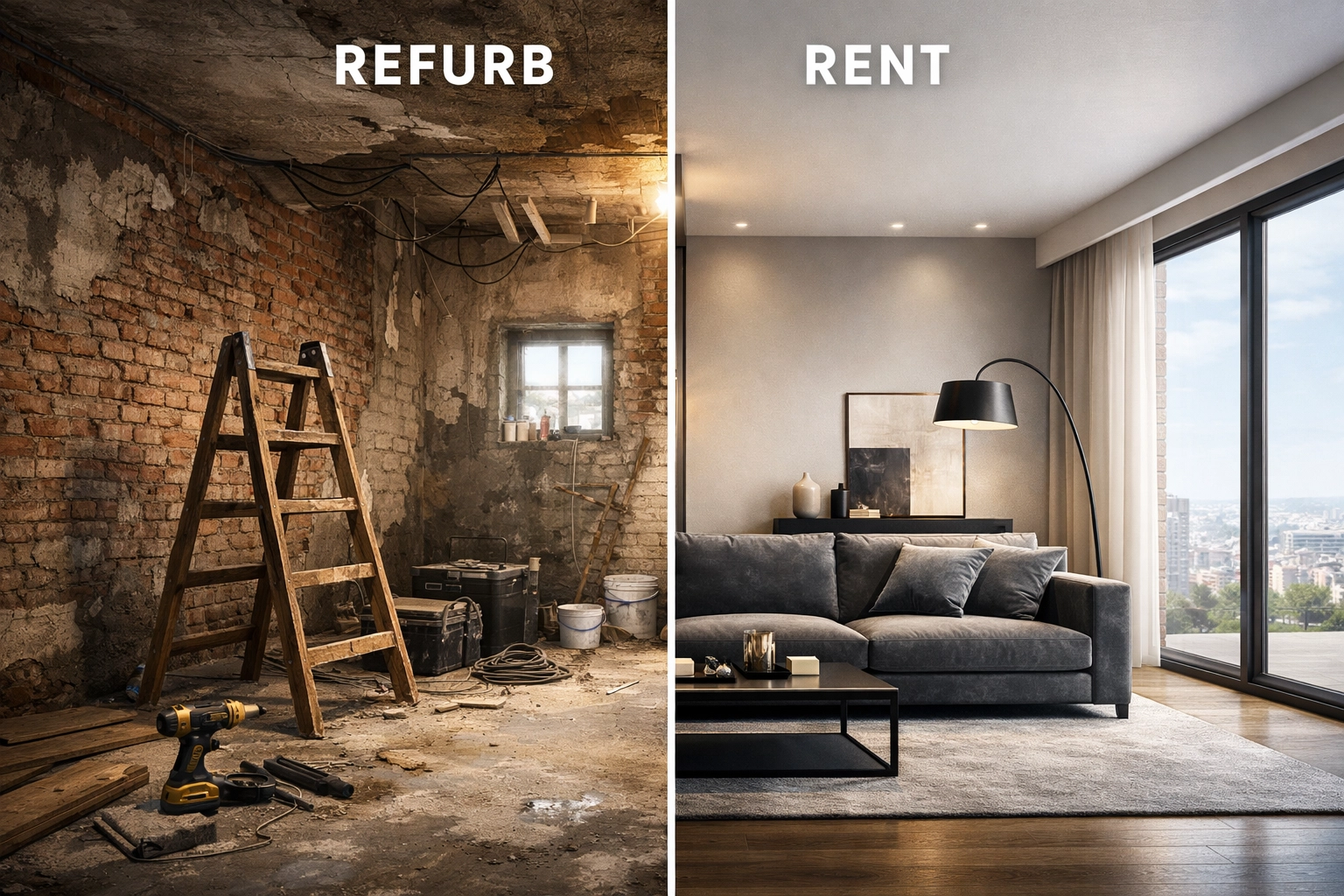
This is often called the BRRR strategy (Buy, Refurb, Rent, Refinance).
- Buy: Use a bridging loan to buy a property quickly, often one that needs work or is priced for a fast sale.
- Refurb: Spend 3 months fixing it up, adding value.
- Rent: Find a tenant to prove the income.
- Refinance: Switch the bridging loan over to a standard buy-to-let mortgage based on the new, higher value of the property.
This allows you to pull some (or all) of your initial deposit back out to use for the next deal. It’s the fastest way to grow a portfolio in the current market.
Why the Local Market in Oldham and Greater Manchester Matters
We see a lot of activity right here in our backyard. The Oldham market in 2026 is still showing great potential for yields, especially with the ongoing regeneration projects. However, because it's a "hot" area for entry-level investors, the best deals go to whoever can complete the fastest.
If you’re looking at a property in Oldham that needs a bit of love, a traditional lender might be hesitant. Using a local mortgage brokerage that understands the street-by-street value can help you secure bridging finance that makes sense for the local area.
Costs to Watch Out For
Don't let the simplicity of a bridge fool you, you need to do your math.
- Valuation Fees: You'll pay for a surveyor to check the property.
- Legal Fees: You'll pay for your solicitor and often the lender’s solicitor too.
- Exit Fees: Some bridge loans charge you when you pay them off (though many don't).
Before jumping in, it's worth looking at our latest updates to see how current rates are shifting.

Is Bridging Right for You?
Ask yourself these three questions:
- Does the deal depend on speed? (e.g., Auction or a seller in a rush).
- Does the property need work? (e.g., It's currently unmortgageable).
- Do you have a clear exit? (e.g., You are certain you can get a BTL mortgage or sell within 12 months).
If you answered "Yes" to these, bridging is likely your best tool for growth. If you are buying a "turnkey" property that is ready for a tenant today and you aren't in a massive rush, stick with a buy-to-let mortgage to save on costs.
FAQs
Can I get a bridging loan if I have bad credit?
Yes, it’s often easier than a BTL. Bridging lenders are much more interested in the property value and your exit plan than your credit score, though it still plays a small part.
How much deposit do I need for bridging?
Usually, you'll need at least 25-30% of the purchase price. However, some lenders allow you to use other properties you own as additional security, which can reduce the cash deposit needed.
How long does it take to switch from a bridge to a BTL?
We usually recommend starting your refinance application about 2-3 months before your bridging loan ends to ensure a smooth transition without any "bridge-end" stress.
Can I use bridging for an HMO?
Absolutely. In fact, many HMO mortgages require the property to be in a certain condition before they lend. Using a bridge to buy and convert a house into an HMO is a very common 2026 strategy.
Summary: Speed Wins in 2026
The property market doesn't wait for slow paperwork. If you want to grow your portfolio this year, you need to be agile. Bridging finance gives you the speed to grab the best deals, while buy-to-let gives you the long-term stability to keep them.
At Hunter Capital, we’re experts at helping property investors navigate these choices. We don’t just find you a loan; we help you build a strategy that works for the 2026 market.
Ready to move on your next deal?
Don't let a slow bank cost you a great property. Whether you're looking for speed or long-term value, let's talk about your options.
Book your free mortgage consultation with Hunter Capital today.