
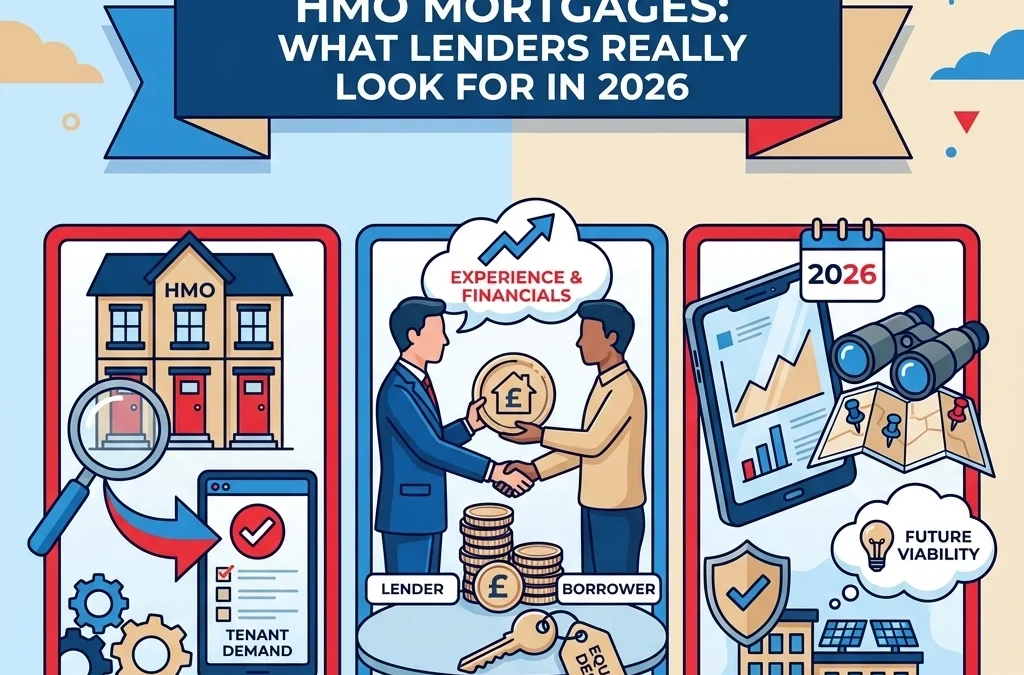
HMO mortgages have become increasingly complex in 2026, with lenders implementing stricter criteria than ever before. While the potential returns from Houses in Multiple Occupation remain attractive – often delivering yields of 7-10% – securing finance requires meeting specific requirements that go far beyond standard buy-to-let lending.
The challenge for property investors is clear: lenders view HMO properties as higher risk due to multiple tenants, increased management complexity, and regulatory compliance requirements. This means that what worked for buy-to-let mortgages simply won't cut it when approaching HMO lenders.
The Core Requirements Lenders Demand
Landlord Experience: The Foundation Stone
Most HMO lenders in 2026 require a minimum of 12 months' landlord experience before they'll consider an application. This experience doesn't necessarily need to be with HMO properties – standard buy-to-let experience often suffices as a starting point.
However, some specialist lenders have found workarounds for inexperienced investors. They'll accept applications from first-time HMO landlords provided they commit to using professional property management companies to handle tenant relations and day-to-day operations.
The reasoning behind this requirement is straightforward: managing multiple tenants in a shared property requires skills that traditional landlords might not possess. Lenders want evidence that borrowers understand tenant dynamics, property maintenance cycles, and the legal obligations that come with HMO management.

Financial Strength: The £25,000 Threshold
Income requirements for HMO mortgages have crystallized around a £25,000 minimum annual income from sources other than rental income. This figure represents lenders' assessment of what borrowers need to maintain mortgage payments during void periods or unexpected expenses.
Crucially, most lenders specify this must be "earned income" from employment or established self-employment. Rental income from other properties typically doesn't count toward this threshold, though some progressive lenders are beginning to take a more holistic view of applicants' overall property portfolios.
The calculation becomes more complex for self-employed applicants. Lenders typically require two years of accounts and may average income over this period, meaning a strong year followed by a weaker one could impact eligibility.
Deposit Requirements: The 25% Minimum Standard
HMO mortgages require substantially larger deposits than standard buy-to-let properties. The industry standard has settled at 25% of the purchase price, translating to a maximum loan-to-value ratio of 75%.
Some lenders offer 80% LTV products, but these come with significantly higher interest rates – often 0.5-1% above their standard HMO rates. For a £300,000 HMO property, this means finding £75,000 rather than the £60,000 required for 80% LTV.
Alternative deposit strategies are emerging. Some lenders accept second properties as additional security, allowing investors to leverage existing equity rather than requiring large cash deposits. This approach particularly benefits portfolio landlords looking to expand their HMO holdings.
Property Standards: What Makes Lenders Comfortable
The Six-Bedroom Rule
A critical threshold exists at six bedrooms. Most mainstream lenders refuse to finance HMO properties with more than six lettable rooms due to additional planning permission requirements and increased regulatory complexity.
This limitation stems from planning regulations that often require change-of-use applications for larger HMOs. Lenders prefer to avoid properties that might face planning challenges or require additional licensing requirements.
However, specialist lenders like Paragon Bank have carved out niches serving larger HMO investments. They'll assess properties with up to 20 individual units, though these applications require more detailed business plans and higher deposits.
Communal Space Requirements
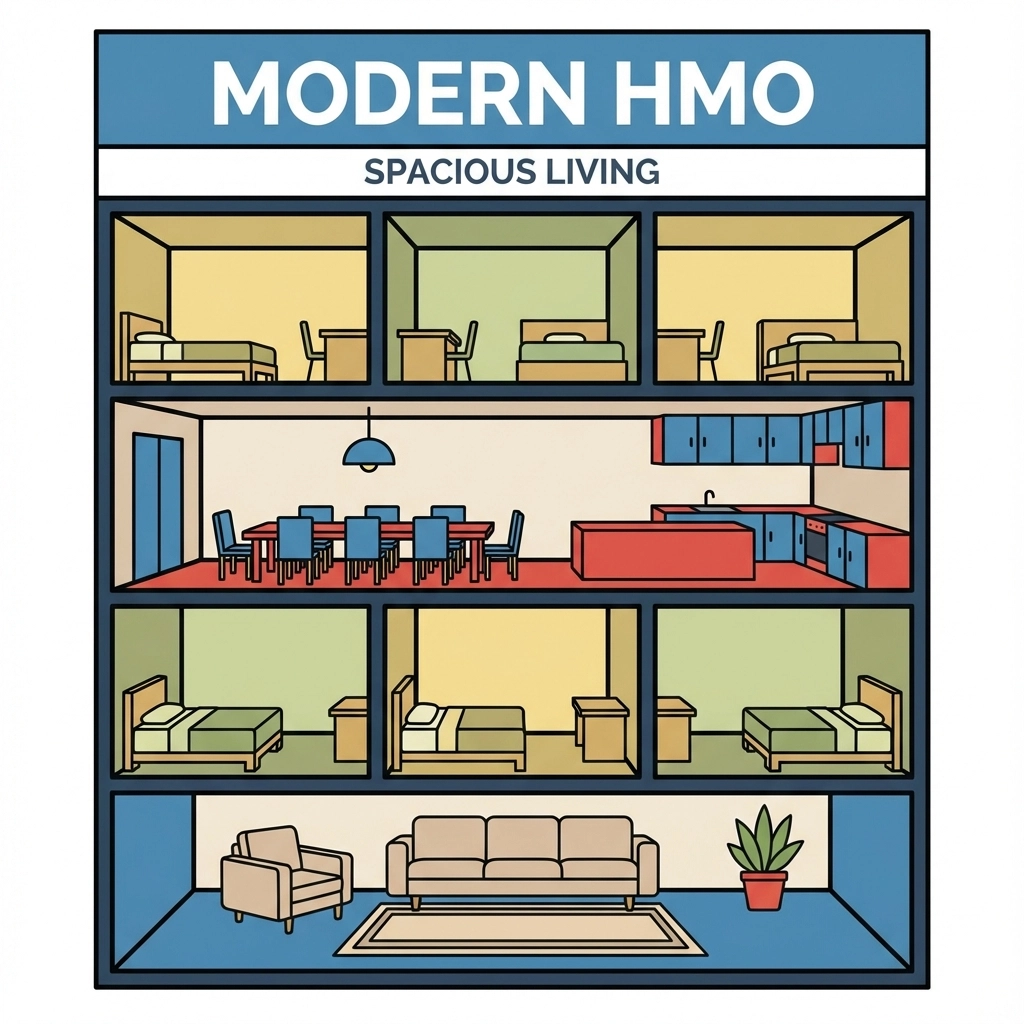
Lenders consistently require evidence of adequate communal areas within HMO properties. This typically means a communal kitchen and dining area, though some lenders prefer additional shared spaces like lounges or garden areas.
The rationale reflects both regulatory compliance and tenant satisfaction. Properties without proper communal facilities struggle to attract quality tenants and may face challenges with local authority licensing requirements.
Room size standards also apply. Most lenders require bedrooms to meet minimum size requirements – typically 6.51 square meters for single occupancy rooms and larger thresholds for rooms intended for couples.
Energy Performance Standards
Environmental regulations have pushed energy performance up lenders' priority lists. Some lenders now require Energy Performance Certificate ratings between A and C, reflecting both regulatory compliance and tenant expectations.
Properties failing to meet these standards face either rejection or requirements for improvement works before completion. This particularly affects older Victorian properties commonly converted to HMO use.
Frequently Asked Questions
Do I Need Landlord Experience for an HMO Mortgage?
Most lenders require a minimum of 12 months' landlord experience, though this doesn't need to be HMO-specific. Standard buy-to-let experience demonstrates understanding of tenant management, property maintenance, and rental income collection – skills that transfer to HMO management.
For inexperienced investors, some lenders offer alternative routes. They'll accept applications provided borrowers commit to using professional property management companies. This approach satisfies lenders' concerns about management capability while allowing new investors to enter the HMO market.
The experience requirement reflects the complexity of managing multiple tenants in shared accommodation. Unlike buy-to-let properties with single tenant families, HMOs require ongoing tenant mediation, more frequent maintenance cycles, and detailed understanding of HMO-specific regulations.
What Are the Property Standards for HMO Lending?
HMO property standards center on room sizes, communal facilities, and safety compliance. Bedrooms must typically meet 6.51 square meter minimums for single occupancy, with larger requirements for double rooms.
Communal facilities must include adequate kitchen and dining space for all residents. Many lenders also prefer properties with additional shared areas like lounges or gardens, viewing these as indicators of tenant satisfaction and rental stability.
Fire safety standards have become increasingly important following regulatory changes. Properties must demonstrate compliance with current fire safety regulations, including appropriate escape routes, fire detection systems, and fire-resistant doors where required.
Planning permission status is crucial. Most lenders prefer properties with established HMO use or clear planning permission for conversion. Properties requiring change-of-use applications face additional scrutiny and potential delays.

How Much Deposit Do I Need for HMO Finance?
The standard deposit requirement for HMO mortgages is 25% of the purchase price, though some lenders accept 20% deposits at higher interest rates. For a typical £250,000 HMO property, this means providing £62,500 as a minimum deposit.
Higher deposits often unlock better interest rates. Some lenders offer preferential pricing for borrowers providing 30-35% deposits, reflecting reduced lending risk and stronger borrower commitment.
Alternative deposit structures are available through specialist lenders. Some accept additional property security instead of large cash deposits, allowing investors to leverage existing property equity for HMO purchases.
Portfolio landlords may access different deposit requirements. Lenders increasingly view HMO applications within the context of borrowers' overall property portfolios, sometimes offering more favorable terms to experienced investors with strong rental income streams.
The Application Process: What to Expect
HMO mortgage applications involve more detailed scrutiny than standard buy-to-let applications. Lenders typically request comprehensive financial information, including tax returns, bank statements, and details of existing property portfolios.
Property valuation surveys for HMOs are more complex than standard residential surveys. Valuers assess rental potential, compliance with HMO regulations, and local market dynamics for shared accommodation.
Processing times typically extend beyond standard mortgage timescales. Allow 6-8 weeks for HMO mortgage applications compared to 4-6 weeks for standard buy-to-let products. Complex properties or first-time HMO investors may face longer timescales.
Working with Specialist Brokers
The complexity of HMO lending makes specialist mortgage brokers invaluable. Many HMO lenders only accept applications through brokers, viewing them as essential filters for ensuring application quality and borrower understanding.
Specialist brokers understand which lenders suit specific property types and borrower profiles. They can navigate the nuances of different lenders' criteria and structure applications to maximize approval chances.
Next Steps for HMO Investment
Understanding lender requirements represents the first step toward successful HMO investment. However, securing finance is only part of the equation – successful HMO investing requires comprehensive understanding of regulations, tenant management, and local market dynamics.
For investors meeting the basic criteria outlined above, the next step involves detailed property research and financial planning. This includes analyzing local rental markets, understanding HMO licensing requirements, and developing realistic cash flow projections.
Contact Hunter Capital's specialist HMO mortgage team to discuss your specific requirements and explore the lending options available for your investment strategy. Our expertise in HMO finance can help navigate the complex lending landscape and secure competitive terms for your property investment goals.
Facebook Summary: HMO mortgages in 2026 require 25% deposits, £25k minimum income, and landlord experience, but offer 7-10% yields for compliant properties. Understanding these stricter lending criteria is key to securing finance for profitable HMO investments.