
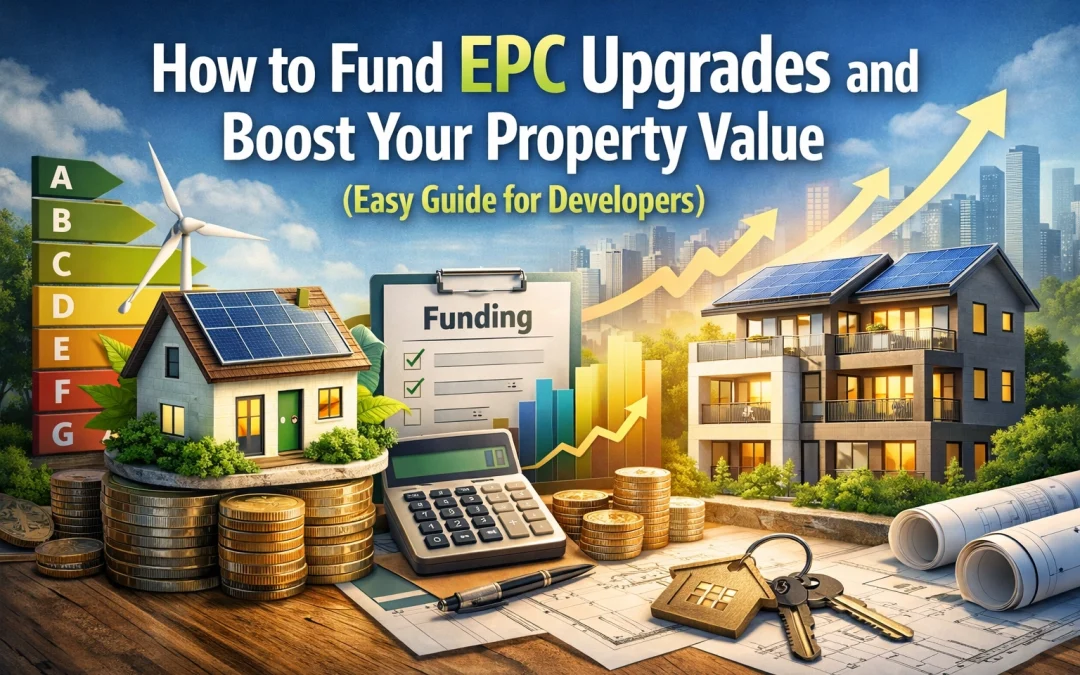
Facebook Summary: Want to boost your property's value while hitting the new 2026 energy standards? Our latest guide breaks down how to fund EPC upgrades without breaking the bank. Read more to see how Naz and the Hunter Capital team can help you secure the right finance for your next project.
Let’s be honest: in the past, an Energy Performance Certificate (EPC) was often just another piece of paper to file away. But as we sit here in March 2026, the game has completely changed. If you’re a property developer or a landlord, your EPC rating is no longer just a "nice to have", it’s a major factor in your property’s valuation, your ability to secure a mortgage, and your legal right to let the property out.
With the 2026 standards now in full swing, many developers are looking at their portfolios and wondering how to bridge the gap between a "D" or "E" rating and the gold-standard "C" or above. The good news? These upgrades don’t just satisfy the regulators; they significantly boost your property value.
In this guide, we’ll show you how to fund EPC upgrades efficiently and why investing in green energy is the smartest move you can make for your ROI this year.
Why EPC Ratings Matter More Than Ever in 2026
The UK government has been clear about its net-zero goals, and the property sector is right in the crosshairs. For developers, a low EPC rating is now a "brown discount", a reduction in value because the building is seen as inefficient and potentially unrentable in the future.
Conversely, achieving a high rating creates a "green premium." Renters are looking for lower energy bills, and buyers are looking for future-proofed investments. If you’re operating in areas like Oldham or the wider Greater Manchester region, where many terrace houses and older builds need a bit of love, being the developer with the highest energy standards gives you a massive competitive edge.
The Benefits of Upgrading Now:
- Increased Property Value: Homes with higher EPC ratings consistently sell for more.
- Lower Running Costs: Efficient buildings are cheaper to maintain and heat.
- Easier Refinancing: Lenders are increasingly offering "Green Mortgages" with better rates for properties rated A-C.
- Compliance: Avoid hefty fines and ensure your buy-to-let properties stay on the right side of the law.

Key EPC Upgrades That Drive the Most Value
You don’t always need to go "off-grid" with solar farms to see an improvement. Often, it’s about the fundamentals. Here are the upgrades that give you the biggest "bang for your buck" when trying to hit those 2026 standards:
- Insulation is King: Start with the loft and cavity walls. It’s relatively cheap but has a massive impact on the EPC score.
- High-Performance Glazing: Moving from single or old double glazing to modern, energy-efficient windows is a must.
- Modern Heating Systems: Replacing an old boiler with a heat pump or a high-efficiency condensing boiler can jump your rating by an entire letter grade.
- LED Lighting: It sounds simple, but switching every bulb in a large HMO or commercial unit is one of the easiest ways to pick up points.
- Renewable Tech: If the budget allows, solar panels or EV charging points are now highly sought after by both residential and commercial tenants.
How to Fund EPC Upgrades Without Draining Your Cash Flow
This is where most developers get stuck. You know you need to do the work, but you don't want to tie up all your liquid capital in insulation and boilers. At Hunter Capital, we specialize in helping you find the right leverage to get these jobs done.
1. Bridging Finance
If you’ve bought a "fixer-upper" that’s currently unrentable due to a poor EPC rating, bridging finance is your best friend. It provides quick access to capital to carry out the renovations. Once the EPC is improved and the value has increased, you can "exit" the bridge by moving onto a standard term mortgage.
2. Refinancing Your Current Portfolio
If you have equity in existing properties, you can refinance to pull cash out. This capital can then be reinvested into EPC upgrades across your entire portfolio. It’s a self-funding cycle: better EPC -> higher value -> more equity -> more upgrades.
3. Development Finance
For larger projects or conversions, development finance can be structured to include the costs of green energy installations from the start. Lenders are very favorable toward "green" development plans right now.
4. Specialist Green Loans and Grants
Depending on the location, such as specific schemes in Oldham or Greater Manchester, there may be local grants or government-backed "Green Deals" available. While these change often, we can help you navigate what’s available at the time of your application.

The "Green Premium" in the Local Market
In our local market in Oldham, we see a lot of older housing stock. For a developer, this is a massive opportunity. Taking a traditional stone terrace or an old mill conversion and bringing it up to a "B" or "C" EPC rating doesn't just make it "compliant", it makes it a premium product in a market where energy costs are a top priority for families and businesses.
By using business finance strategies to cover these costs, you keep your own cash available for the next acquisition while the property itself pays for its own improvements through increased valuation.
Working with Hunter Capital
At Hunter Capital, we aren't just here to tick boxes. Naz and the team understand the local property market and the specific pressures developers face in 2026. We look at your whole portfolio to see where we can unlock value.
Whether you are looking for HMO mortgages that require specific energy standards or you are an expat/foreign national investing in UK property, the rules are the same: Green is the new gold.

FAQ: Funding EPC Upgrades
Q: Can I get a mortgage on a property with an EPC rating of F or G?
A: It is very difficult. Most lenders now require a minimum of an E just to consider it, and many are pushing toward a C. This is where bridging finance is essential to "fix" the property before getting a long-term loan.
Q: How much do EPC upgrades usually cost?
A: It varies wildly. Simple insulation and LED lighting might cost a few thousand pounds, while a full retrofit with a heat pump could be £15,000+. The key is to calculate the "Value Add", often, a £10k investment can add £20k-£30k to the final valuation.
Q: Are there better rates for Green Mortgages?
A: Yes! Many of our lenders offer discounted interest rates or reduced fees for properties that meet high energy efficiency standards.
Q: Does a better EPC rating really help with HMOs?
A: Absolutely. In an HMO where the landlord often pays the bills, an energy-efficient building directly increases your monthly profit margins.
Boost Your Property Value Today
The 2026 standards are here, but they shouldn't be seen as a hurdle. They are an opportunity to professionalize your portfolio, increase your yields, and contribute to a more sustainable housing market in Oldham and beyond.
If you’re ready to fund EPC upgrades and want to see which finance product is right for your project, let’s have a chat. We can look at your current situation and find a way to make your capital work harder for you.
Ready to get started?
Book a free consultation with Naz and the Hunter Capital team here or explore our latest updates for more property insights.
