

When clients approach Hunter Capital for mortgage advice, one of the most common questions we hear is: "Do I really need protection insurance?" It's a fair question. After all, you're already stretching your budget for a deposit, legal fees, and moving costs. The last thing you want is another monthly expense.
The short answer is that protection insurance isn't legally required, but for many borrowers, it's one of the most important financial decisions they'll make alongside their mortgage. Here's why.
What is Protection Insurance?
Protection insurance is a broad term covering several types of cover designed to protect your mortgage payments and your family's financial security. Unlike building insurance or private medical insurance, protection insurance specifically targets the risk of you being unable to make your mortgage payments due to death, serious illness, or unemployment.
The three main types include life insurance (which pays out if you die), critical illness cover (which provides a lump sum if you're diagnosed with a serious condition), and income protection (which replaces your salary if you can't work due to illness or injury).

Most UK lenders will ask about your protection arrangements during the mortgage application process, but they cannot make it a condition of lending. However, they do this for good reason, mortgage defaults due to unexpected life events remain one of the biggest risks to both borrowers and lenders.
Is Life Insurance Mandatory for a Mortgage?
No, life insurance is not mandatory for a mortgage in the UK. Unlike buildings insurance, which most lenders require, protection insurance remains optional. However, this doesn't mean you should dismiss it entirely.
Our clients often discover that while lenders don't require life insurance, they do expect borrowers to demonstrate how they would maintain mortgage payments if the unexpected happened. During affordability assessments, mortgage underwriters will ask about existing protection policies and may factor this into their lending decision.
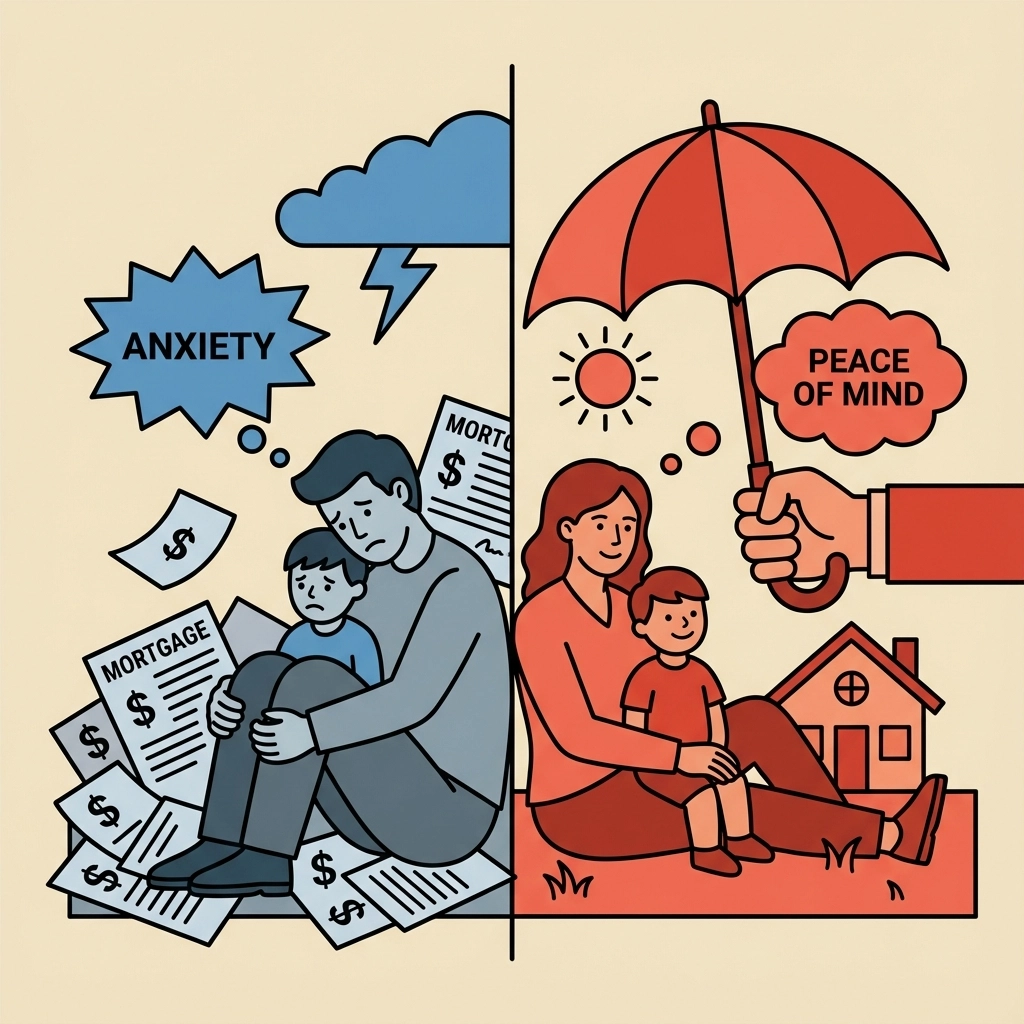
The reality is that 42% of UK households would struggle to maintain mortgage payments for more than six months if the main earner became unable to work. Without adequate protection, families often face the devastating choice between keeping their home and managing other essential expenses.
For joint mortgages, the situation becomes more complex. If one partner dies or becomes unable to work, the surviving partner typically becomes responsible for the full mortgage payment. Unless their individual income can comfortably cover this amount, protection insurance becomes crucial.
Can I Get Income Protection if I'm Self-Employed?
Yes, self-employed individuals can absolutely get income protection, though the application process differs from employed applicants. As a mortgage brokerage working with many self-employed clients, we've seen how crucial this cover can be for business owners and freelancers.
Self-employed income protection policies typically require additional documentation, including business accounts, tax returns, and sometimes evidence of contracts or projected earnings. Insurers generally calculate cover based on your average earnings over the previous two to three years, which means recent start-ups might face limitations on coverage amounts.

The key difference for self-employed applicants is the waiting period. While employed individuals might access cover after four weeks of illness, self-employed policies often include longer deferred periods: typically 13, 26, or 52 weeks. This reflects the reality that business owners often have more flexibility to work around health issues than traditional employees.
Premium costs for self-employed income protection tend to be higher than employed equivalents, reflecting the perceived higher risk. However, for our self-employed clients, this cover often represents their only safety net beyond statutory benefits, making it particularly valuable.
When Protection Insurance Makes Perfect Sense
Through our experience advising thousands of mortgage clients, we've identified several scenarios where protection insurance proves invaluable:
Young families with limited savings represent the highest-risk category. Clients in their 20s and 30s often carry significant mortgage debt relative to their assets. When a 28-year-old client with a £300,000 mortgage and minimal savings faces a critical illness diagnosis, life insurance can mean the difference between financial security and bankruptcy.
Single-income households face concentrated risk. We recently worked with a client whose partner stopped work to care for young children. With the family's entire income dependent on one person, comprehensive protection became essential rather than optional.
Self-employed individuals and contractors lack the sick pay safety nets available to permanent employees. A freelance consultant earning £60,000 annually has no guarantee of income if unable to work. Income protection insurance replaces this missing security.
Clients with dependents who have special needs require long-term financial security. Standard savings rarely cover both mortgage payments and ongoing care costs. Protection insurance ensures families can maintain their home while meeting additional support needs.
The Real Cost of Going Without Cover
The statistics around unprotected mortgage holders make sobering reading. According to industry research, the average UK mortgage holder would exhaust their savings within four months if they lost their primary income.
Our own client experiences reinforce these figures. We've supported families who faced mortgage arrears within six weeks of an unexpected job loss or health crisis. While some managed to restructure their loans or access family support, others ultimately lost their homes.
The emotional cost extends beyond financial loss. Clients describe the stress of managing serious illness while worrying about mortgage payments. For families already dealing with grief or health challenges, financial uncertainty adds unnecessary pressure during the most difficult periods of their lives.
Alternatives to Traditional Protection Insurance
Not every client needs comprehensive protection insurance. Several alternatives provide partial coverage or suit specific circumstances:
Employer benefits often include group life insurance or income protection. While these policies typically offer limited cover, they might suffice for clients with modest mortgage commitments and substantial savings.
Critical illness cover through pension schemes has become increasingly common. Many workplace pension providers now offer optional critical illness benefits at competitive rates.
Mortgage payment protection insurance (MPPI) specifically covers mortgage payments during unemployment or illness. While more limited than comprehensive income protection, MPPI can suit clients with stable employment and good job security.
Joint life policies work well for couples where both partners contribute significantly to mortgage payments. These policies pay out on the first death, providing cost-effective cover for many families.
Making the Right Decision for Your Situation
The decision about protection insurance shouldn't be made in isolation from your broader financial planning. At Hunter Capital, we encourage clients to consider their total risk exposure, not just their mortgage commitment.
Start by calculating your family's essential monthly expenses, including mortgage payments, utilities, food, and transport costs. Compare this against your household's savings and any alternative income sources available during a crisis.
Consider your employment stability and industry outlook. Clients in secure public sector roles might reasonably accept lower protection levels than those in volatile industries or seasonal employment.
Factor in your health history and family medical background. While protection insurance costs more for higher-risk applicants, these same individuals often gain the most value from comprehensive cover.
Getting Expert Guidance
Protection insurance represents a complex area where generic advice rarely suits individual circumstances. Premium costs, policy terms, and coverage options vary significantly between providers, making professional guidance valuable.
Our approach at Hunter Capital involves understanding each client's complete financial picture before recommending protection options. We work with specialist insurance advisers who can access the whole market and identify the most competitive solutions for your specific needs.
The key is timing your protection arrangements alongside your mortgage application. Many insurers offer preferential rates for new mortgage customers, and arranging cover early ensures you're protected from day one of homeownership.
If you're considering a mortgage or reviewing your existing protection arrangements, speak with our team about your specific circumstances. We can help you understand your options and connect you with specialists who can design protection strategies that fit your budget and risk profile.
Facebook Summary: Wondering if you need protection insurance with your mortgage? It's not mandatory, but for families with limited savings, self-employed borrowers, or single-income households, it could be the difference between keeping your home and losing it during a crisis. Get expert guidance to find the right balance for your situation.