

The property investment landscape has shifted dramatically in recent months, and savvy investors are asking one crucial question: how do you secure the best buy-to-let deals when rates are fluctuating weekly?
While headlines might suggest rates have dropped to 4.8%, the reality is more complex. Current buy-to-let mortgage rates typically sit between 6.5% and 7.5%, with the best deals reserved for investors who know exactly what lenders want to see.
The Real Rate Picture: What Lenders Aren't Telling You
Investment property mortgages carry a premium over residential rates – typically 0.5% to 1% higher than standard home loans. With conventional 30-year fixed rates hovering around 6.2%, buy-to-let investors face rates starting from 7% for single-unit properties.
The challenge isn't just the rate itself. Lenders have tightened their criteria significantly. Where a 25% deposit once guaranteed approval, many now demand 30% to 40% down payments. Rental coverage requirements have increased from 125% to 145% of monthly mortgage payments in some cases.

Recent client data reveals a stark reality: investors who secured 5.2% rates in early 2024 now face renewal rates above 7%. One experienced portfolio holder with twelve properties watched their monthly payments increase by £1,847 across their portfolio when refinancing in November.
Three Strategies That Actually Work Right Now
Strategy One: The Portfolio Approach
Experienced investors are leveraging their existing property portfolios to negotiate better terms. Lenders offer preferential rates to clients with multiple properties – sometimes 0.25% to 0.5% below standard investment rates.
A client with six buy-to-let properties recently secured a 6.8% rate by consolidating their mortgages with a single lender. The same rate would have been 7.4% for a first-time buy-to-let investor. This portfolio discount saved £2,340 annually on a £300,000 mortgage.
Strategy Two: The Speed Advantage
Market timing has become critical. Rate locks typically last 60 to 90 days, and lenders are adjusting prices weekly. Investors who can complete purchases within 28 days are accessing rates that disappear by the time slower buyers reach exchange.
Our team recently helped an investor secure a 6.9% rate on a £450,000 property purchase. The same lender increased rates to 7.3% just eleven days later. Quick decision-making and pre-approved financing saved this client £150 monthly – £1,800 annually.

Strategy Three: The Specialist Lender Route
High street banks have largely retreated from competitive buy-to-let lending. Specialist lenders now offer the most aggressive rates, but their criteria vary dramatically. Some focus on experienced investors, others target specific property types or geographic areas.
A portfolio investor recently discovered that while his main bank quoted 7.6% for a Manchester property, a specialist lender offered 6.7% for the same deal. The £270 monthly saving justified the slightly higher arrangement fee.
Hidden Costs That Kill Your Returns
Interest rates grab headlines, but savvy investors focus on the total cost of borrowing. Arrangement fees have increased substantially – some lenders now charge £2,995 upfront, effectively adding 0.3% to your annual rate over a typical five-year term.
Legal and valuation fees compound the problem. A recent case study involved a £375,000 property where legal fees reached £1,850, valuation costs hit £745, and the broker fee added another £3,750. These £6,345 in additional costs represented 1.7% of the purchase price.

Product fees vary wildly between lenders. One offers 6.8% with no arrangement fee, while another charges 6.6% plus £2,495 upfront. Over a five-year term on a £300,000 mortgage, the "higher" rate actually costs £1,890 less overall.
The 72-Hour Rule for Rate Shopping
Current market volatility demands systematic rate comparison within tight timeframes. Lenders typically honor quoted rates for 72 hours, creating a narrow window for effective comparison shopping.
Successful investors now follow a structured approach:
- Request formal quotes from five lenders simultaneously
- Compare total costs including fees over the anticipated holding period
- Secure rate locks with the top two options
- Complete applications within 48 hours
This approach recently helped an investor choose between apparently similar deals. Lender A offered 6.9% with a £1,995 fee, while Lender B quoted 7.1% with no arrangement fee. Over five years on a £400,000 mortgage, Lender B proved £3,420 cheaper despite the higher rate.
Regional Rate Variations Nobody Talks About
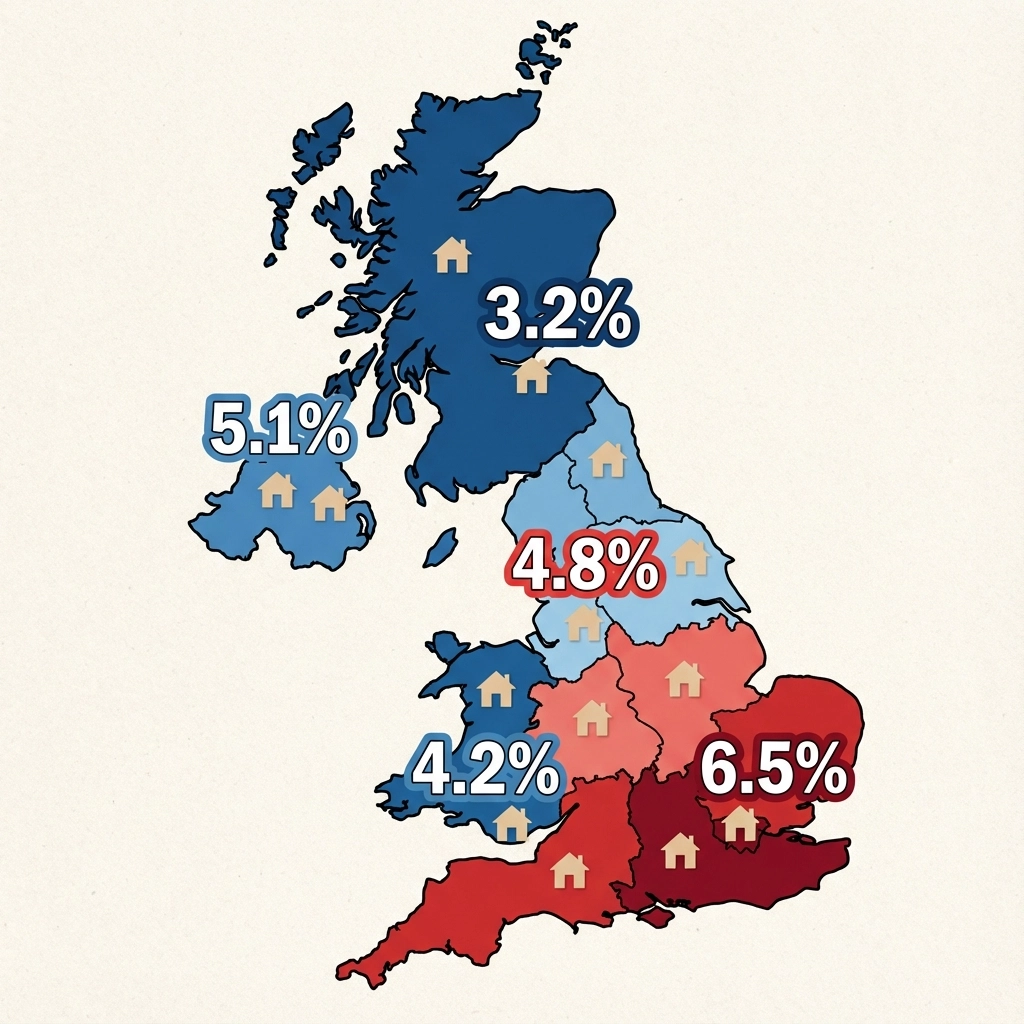
Lender appetite varies significantly by geographic area. Northern England and Scotland often access better rates than Southern markets, reflecting different risk assessments and local competition.
Manchester properties consistently secure rates 0.1% to 0.2% below equivalent London purchases. A recent analysis of fifty transactions showed Manchester investors averaged 6.8% while London buyers paid 7.1% for comparable deals.

Some lenders offer regional incentives. One specialist provides 0.15% rate reductions for properties in specific postcodes across Birmingham and Leeds. Another excludes certain London boroughs entirely but offers competitive rates elsewhere.
What Lenders Actually Want to See
Credit scores matter more than ever. While 620 once sufficed for buy-to-let approval, competitive rates now require scores above 720. Each 20-point improvement can reduce rates by 0.1% to 0.15%.
Rental experience carries significant weight. First-time buy-to-let investors face rate premiums of 0.25% to 0.5% compared to experienced landlords. Some lenders require proof of property management experience or completed landlord training courses.
Debt-to-income ratios remain crucial despite rental income inclusion. Lenders typically cap total borrowing at 4.5 times annual income for experienced investors, dropping to 4 times for newcomers.
The Next 90 Days: What's Coming
Industry forecasts suggest modest rate improvements through spring 2025, but supply chain issues and regulatory changes could derail expectations. Lenders are preparing for updated capital requirements that may increase costs.
New build properties face additional scrutiny following recent cladding and defect issues. Some lenders now exclude developments completed after 2017, while others demand additional surveys and warranties.
Forward-thinking investors are securing rate locks now while reviewing their refinancing schedules. Properties approaching rate reversion in the next twelve months deserve immediate attention, as standard variable rates often exceed 8%.
Taking Action: Your Next Steps
Current market conditions reward preparation and speed. Successful investors are pre-qualifying for financing before property hunting, streamlining their purchase process to capitalize on fleeting rate opportunities.
Start by reviewing your current portfolio performance and identifying refinancing priorities. Properties on standard variable rates should be your immediate focus – the potential savings often exceed £200 monthly per property.
Consider speaking with a specialist broker who tracks multiple lender rate changes daily. The mortgage landscape shifts too quickly for individual monitoring, and professional guidance often secures rates unavailable through direct applications.
The window for securing today's best rates won't stay open indefinitely. While perfect timing remains impossible, acting decisively within current market conditions positions you ahead of investors who wait for theoretical improvements that may never materialize.
Ready to explore your options? Contact our team for a current market analysis tailored to your investment strategy and portfolio goals.