

Facebook Summary:
Tired of losing property deals to faster buyers? In 2026, bridging loans have become the go-to tool for savvy UK investors to bypass slow bank queues and secure the best sites. Here is why everyone is talking about them and how you can use one to grow your portfolio.
It is 2026, and if you have been hanging around any property auction or networking event in the UK lately, you have probably heard the word "bridging" more than you’ve heard about the weather.
At Hunter Capital, we have seen a massive shift in how our clients are funding their projects. Gone are the days when you could wait three months for a high-street bank to say "yes." In today’s market, if you aren’t fast, you are last.
So, why is everyone suddenly obsessed with bridging finance? And more importantly, should you be using it too? Let’s break it down in plain English.
The 2026 Property Landscape: Why Banks Are Too Slow
We are living in a time where traditional lenders, the big banks we all know, have become incredibly cautious. Between stricter underwriting rules and a bit of a "wait and see" approach to the economy, getting a standard mortgage can feel like trying to run a marathon through treacle.
While a bank might take 45 to 60 days to get your funds ready, a seller in a competitive market like Oldham or Greater Manchester wants to close in 14 to 21 days. If you’re relying on a standard Buy to Let mortgage to buy a property at auction or a "fixer-upper" that needs a quick turnaround, you’re likely to lose out to a cash buyer.
This is where bridging loans come in. They are essentially short-term loans that "bridge" the gap between you buying a property and securing long-term finance (or selling it).

1. Speed is Your Biggest Competitive Advantage
In 2026, inventory is tight. When a good deal hits the market, there are often five or six serious investors looking at it. Most sellers now prefer "non-contingent" offers, meaning they want to know the money is there and won't be held up by a slow surveyor or a bank’s internal committee.
Recent data shows that over 65% of successful "fix-and-flip" deals this year have been funded by private bridging lenders. Why? Because these lenders focus on the value of the property and your "exit strategy" rather than just your monthly income. At Hunter Capital, we help our clients get from application to completion in a fraction of the time it takes a traditional bank.
2. Dealing with "Un-mortgageable" Properties
Banks are picky. If a house doesn’t have a working kitchen, has structural issues, or is a bit of a "wreck," most high-street lenders won't touch it with a barge pole.
For developers, these "wrecks" are where the profit is. Bridging finance allows you to buy these properties, do the work, and then refinance onto a standard mortgage once the property is in a let-able or sellable condition.
If you are looking at a project that needs serious TLC, a bridging loan isn't just an option, it’s often the only way to get the deal done.
3. Flexibility in a Changing Market
One of the reasons we are seeing so much bridging activity in 2026 is flexibility. Unlike a 25-year mortgage, a bridging loan is usually for 12 to 18 months. This gives you breathing room.
Perhaps you are waiting for interest rates to drop further before locking into a long-term deal. Or maybe you’re waiting for a planning permission application to be approved to increase the property's value. A bridge gives you the capital now without locking you into a long-term commitment.

Bridging Loans vs. Buy to Let: Which is Right?
We often get asked, "Naz, shouldn't I just get a Buy to Let mortgage?"
The answer depends on the property and your goals. If the house is ready to move into and you aren't in a massive rush, a Buy to Let mortgage is usually cheaper in terms of interest rates.
However, if the property needs work or you need to move fast, bridging is the winner. For a deeper dive into this, check out our post on Bridging Loans vs Buy to Let to see the cost-benefit analysis.
Why Bridging is Booming in Oldham
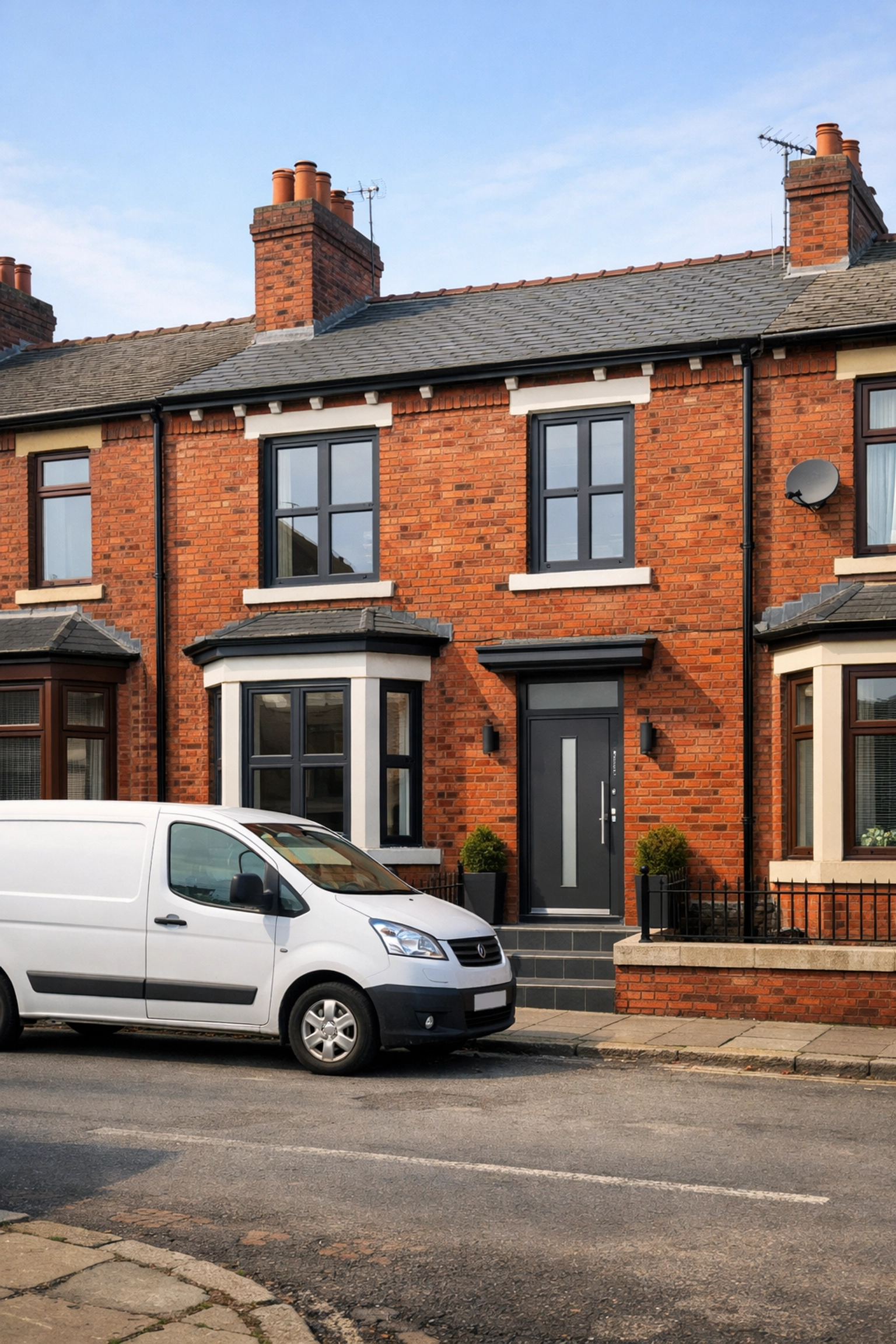
Being based here, we’ve seen a huge surge in Bridging Loans in Oldham. The local market is moving fast, and investors are looking to convert older terrace houses into high-quality HMOs (Houses in Multiple Occupation).
Standard lenders are often nervous about HMO conversions until the work is finished and the licenses are in place. Local developers are using bridging finance to buy the property, fund the conversion, and then switch to HMO mortgages once the tenants are ready to move in. It’s a proven strategy that is revitalising parts of our town.
What About the Costs?
Let’s be honest: bridging loans are more expensive than traditional mortgages. You’ll typically see higher interest rates and an arrangement fee.
But here is how the pros look at it: It’s a cost of doing business.
If a bridging loan costs you £10,000 in interest but allows you to secure a property at a £30,000 discount because you can move fast, or allows you to take on a project that will net you £50,000 in profit, then that £10,000 is a very smart investment.
The Golden Rule: You Must Have an Exit Strategy
Lenders love bridge loans in 2026, but they won't give you the money unless you can prove how you’re going to pay it back. This is called your "exit strategy." Common exits include:
- Selling the property after refurbishment.
- Refinancing onto a long-term commercial mortgage.
- Selling another asset to clear the debt.
Without a solid exit, a bridging loan can become a bridge to nowhere. That’s why we sit down with every client to make sure the plan is airtight before we approach our lenders.

How We Can Help at Hunter Capital
Navigating the world of bridging finance can feel a bit overwhelming, especially with so many new lenders entering the market in 2026. My team and I are here to make it simple. We don't use jargon, and we don't hide fees.
Whether you are a seasoned developer or a first-time investor looking at a property in Oldham, we can help you find the right bridge to get your project moving.
Ready to see if a bridging loan fits your next project?
Request a free consultation with us today.
Frequently Asked Questions (FAQ)
1. How quickly can I actually get a bridging loan?
In 2026, we are seeing some deals complete in as little as 7 to 10 working days, provided you have your paperwork ready and a proactive solicitor.
2. Can I get a bridging loan if I have bad credit?
Yes, it is possible. Because bridging loans are secured against the property, lenders are often more interested in the asset's value and your exit strategy than your credit score.
3. Do I need a massive deposit?
Typically, lenders will offer up to 70-75% Loan to Value (LTV). However, if you have other properties with equity, you might be able to use them as additional security to reduce the cash deposit needed.
4. What is the difference between "open" and "closed" bridging?
A "closed" bridge has a fixed date for repayment (e.g., you’ve already exchanged on the sale of your current house). An "open" bridge has no fixed end date but usually needs to be paid back within 12-18 months.
5. Can I use a bridging loan for business equipment or cash flow?
While usually used for property, some forms of business finance operate similarly to bridging. If you need short-term capital for your business, it’s worth a chat.
Want to stay updated on the latest in the UK mortgage market? Check out our Latest Updates page or learn more About Us and how we support investors in Oldham and beyond.