
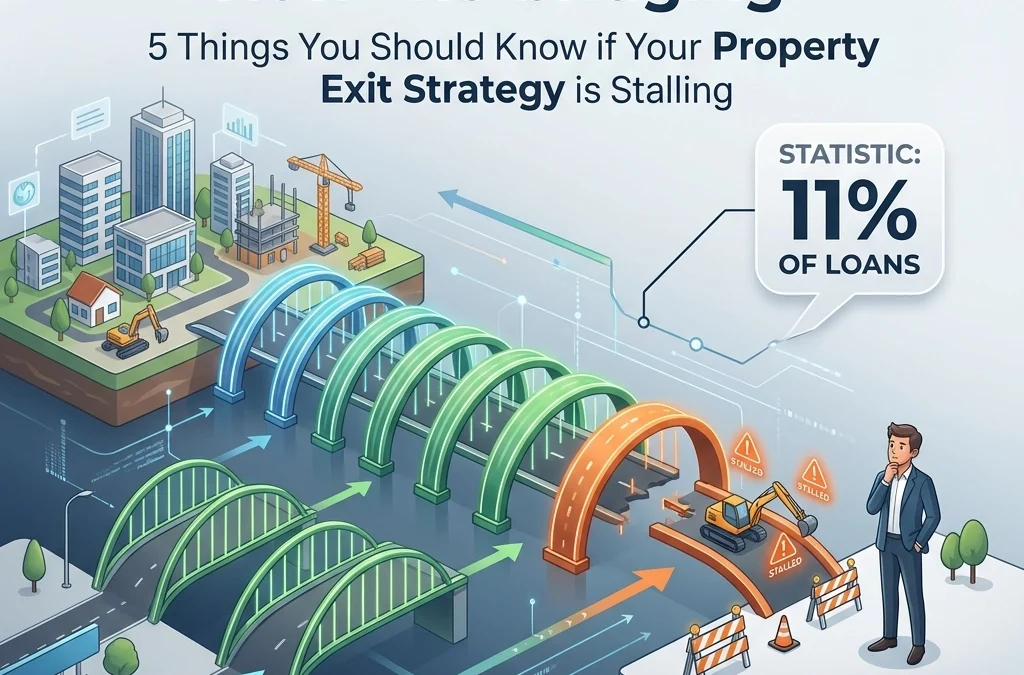
Facebook Summary: Is your property exit strategy taking longer than planned? With 1 in 9 bridging loans now being "re-bridged," you aren't alone, but you do need a plan. Read our latest guide on how to handle stalling projects and secure your finance before the clock runs out.
In the fast-paced world of UK property development, bridging finance is often the secret weapon that gets a deal over the line. Whether you’re a seasoned landlord in Oldham or a first-time developer in Greater Manchester, bridging finance provides that vital "bridge" between buying a property and securing long-term funding or selling it for a profit.
But here’s the reality: property projects rarely go exactly to plan.
Recent market data has revealed a startling trend: 1 in 9 bridging loans are now "re-bridges." This means that instead of the loan being paid off by a sale or a standard mortgage, the borrower is taking out a second bridging loan to pay off the first one.
If you find yourself watching your loan expiry date creep closer while your property is still a building site or the "For Sale" sign is gathering dust, don’t panic. At Hunter Capital, we see this all the time. Being in this position doesn't mean you've failed; it just means you need a smarter strategy to cross the finish line.
What Exactly is Re-bridging?
To put it simply, re-bridging is when you use a new bridging loan to settle an existing one.
Think of it like a relay race. Your first "runner" (the original lender) has done their bit, but they’re reaching the end of their track. If the next stage of your project (the sale or the buy-to-let mortgage) isn't ready to take the baton, you bring in a second "runner" to keep the momentum going.
It’s a way to buy more time. However, it isn't something to be done lightly. Because bridging is short-term and carries higher interest rates, staying on it for longer than intended can get expensive. But, as we’re about to explore, it’s often a much better option than defaulting on your original loan.

1. Why Exit Strategies Fail (It’s Not Always Your Fault)
Most developers go into a project with a rock-solid "Exit Strategy." You plan to refurbish the property in four months and sell it in six. But life happens. Here are the most common reasons we see exit strategies stall in today’s market:
- Refurbishment Delays: Finding reliable contractors in the North West can be a challenge. Material shortages or unexpected structural issues (the joys of Victorian terraces in Oldham!) can easily add two or three months to a project.
- Planning Permission Hold-ups: Dealing with local councils can be a slow process. If your exit depends on getting planning for a conversion or an extension, a backlog at the town hall can leave you stuck.
- A Sluggish Sales Market: Even if the house is perfect, the UK housing market can be unpredictable. If a buyer pulls out at the last minute or the chain breaks, your timeline is instantly shot.
- Refinance Friction: Sometimes, switching to a commercial mortgage or an HMO mortgage takes longer than expected due to stricter lender criteria or valuation disputes.
2. The Risks: Re-bridging is Not a "Get Out of Jail Free" Card
While re-bridging is a fantastic tool, it’s important to be eyes-wide-open about the risks.
Firstly, it is expensive. You will likely have to pay a new set of arrangement fees, valuation fees, and legal costs. If you aren't careful, the costs of the finance can start eating into your project profits.
Secondly, there is lender fatigue. Some lenders are hesitant to step in when they see a "bridge on a bridge." They want to know exactly why the first loan wasn't paid off. If they think the project is fundamentally flawed or the developer is inexperienced, they might decline the application.
Lastly, you run the risk of equity erosion. If property prices dip while you are stuck on a bridge, your Loan-to-Value (LTV) ratio might increase, making it harder to find a new lender willing to take the risk.

3. Why a "Plan B" is Crucial From Day One
At Hunter Capital, when we sit down with clients to discuss development finance, we always ask: "What if this doesn't sell?"
A good developer always has a secondary exit strategy. For example:
- Plan A: Sell the property for a £100k profit.
- Plan B: If it doesn't sell, move it onto a buy-to-let product, rent it out, and wait for the market to improve.
If you have a Plan B ready, re-bridging becomes a controlled, strategic move rather than a desperate scramble. Knowing you have the option to refinance into a long-term product gives you, and your lenders, peace of mind.
4. Communication is Your Most Powerful Asset
If you realise your exit strategy is stalling, the worst thing you can do is go quiet.
Your original lender doesn't want to repossess your property, that’s a headache for them, too. If you talk to them (or better yet, have us talk to them) two or three months before the loan expires, you have options.
They might be willing to grant an extension, or they might be happy to see you moving to a new lender for a re-bridge. If you wait until the week the loan is due, you’ll likely face "default interest rates," which can be double the standard rate.
5. How Hunter Capital Helps When Things Don't Go to Plan
This is where having an expert broker in your corner makes all the difference. When 1 in 9 people are re-bridging, you need a broker who knows which lenders are comfortable with "second-generation" bridging.
At Hunter Capital, we don’t just find you a loan; we help you restructure your entire position. We look at:
- The Valuation: Is the property worth more now that some work has been done? If so, we might be able to get you a better rate based on the "as-is" value.
- The Lender Network: We have access to specialist lenders who specifically look for re-bridging opportunities where there is a clear path to completion.
- The Long Game: We help you align your re-bridge with your eventual long-term finance, whether that’s sharia finance or a standard commercial loan.

FAQs About Re-bridging
Can I get a re-bridge with a different lender?
Yes, and in many cases, it’s actually easier to move to a new lender than to ask your current one for an extension. A fresh pair of eyes can often see the value remaining in the project.
Is re-bridging legal?
Absolutely. It is a standard financial practice in the property industry, provided you meet the lender's criteria and have a viable exit strategy for the second loan.
How much does re-bridging cost?
You should expect to pay an arrangement fee (usually 1-2%), valuation fees, and legal fees. The interest rates are typically similar to standard bridging, though they depend on the LTV and the status of the project.
How many times can I re-bridge?
Technically, there’s no hard limit, but "bridge on bridge on bridge" is a major red flag for lenders. It suggests the project isn't viable. We strongly recommend getting it right by the second bridge at the latest.
Don’t Let the Clock Run Out
If you’re feeling the pressure of an expiring bridge loan, don’t wait for the "default" letter to arrive. Whether your refurb in Oldham is taking longer than expected or your buyer in Manchester has gone quiet, there are always options if you act early.
Naz and the team at Hunter Capital specialize in navigating these tricky situations. We’re local, we’re simple to deal with, and we know exactly how to get your project back on track.
Is your bridging loan coming to an end? Don't stress: let's fix it.
Request a Free Consultation with Hunter Capital Today or Contact Us to chat about your project.